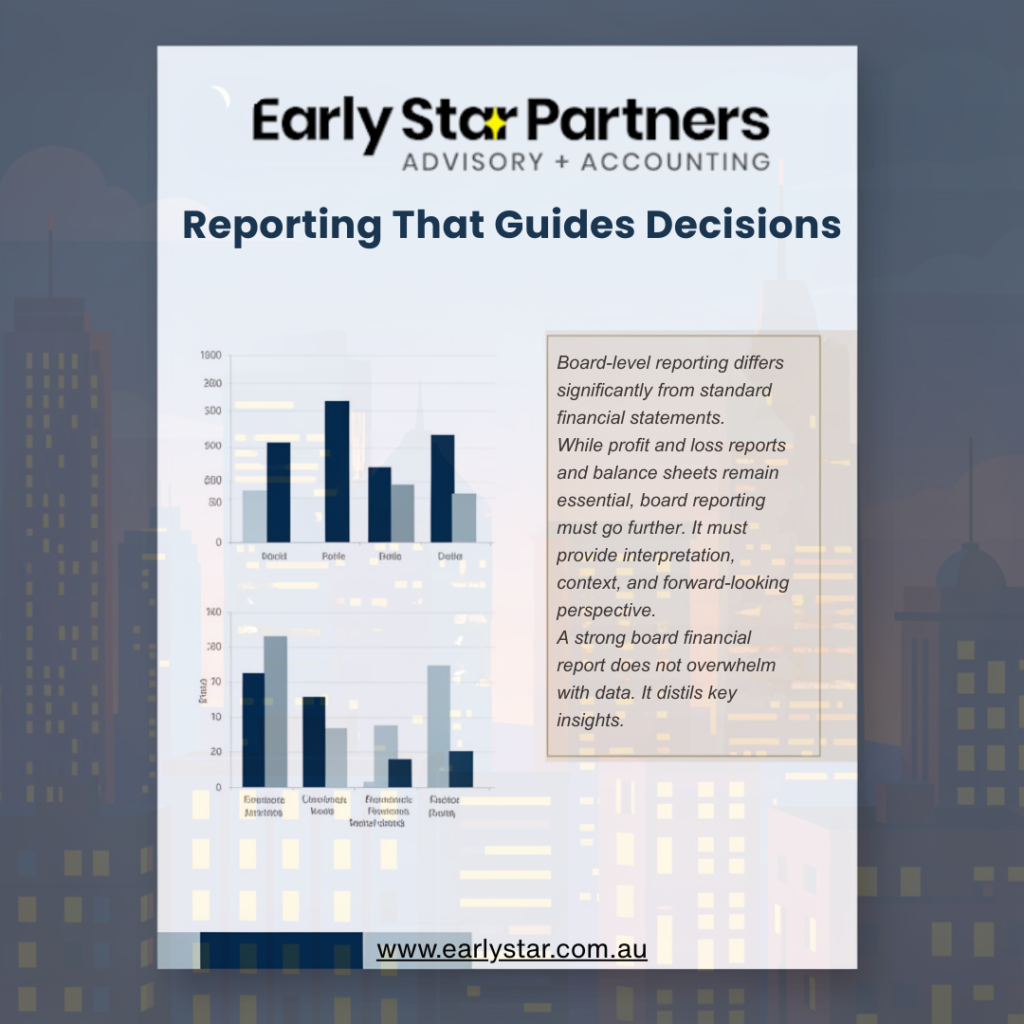
Board-level reporting differs significantly from standard financial statements.
While profit and loss reports and balance sheets remain essential, board reporting must go further. It must provide interpretation, context, and forward-looking perspective.
A strong board financial report does not overwhelm with data. It distils key insights.
Moving Beyond Basic Statements
Traditional reports answer “what happened.”
Board reporting must also address:
- Why it happened
- What it means
- What may happen next
This requires analysis layered onto financial data.
For example, a decline in margin may be acceptable if tied to strategic investment — but concerning if unexplained.
Context transforms numbers into guidance.
Key Components of Effective Board Reporting
Effective board reporting typically includes:
- Executive financial summary
- Variance analysis against budget
- Cash flow outlook
- Key risk indicators
- Strategic financial commentary
Without commentary, reports become static documents rather than strategic tools.
Why Clarity Matters
Board members often come from diverse professional backgrounds. Financial expertise may vary.
Clarity ensures that everyone understands:
- Current financial position
- Short-term risks
- Long-term sustainability
- Areas requiring oversight
Clear reporting prevents misinterpretation and supports confident governance.
How Early Star Partners Elevates Reporting Standards
We support organisations by:
- Designing board-ready financial reports
- Providing structured commentary
- Integrating forecasting insights
- Aligning financial data with strategic objectives
Reporting should inform leadership — not simply satisfy compliance.