
Don’t Wait Until June: Start Your 2026 Tax Planning Now

For many Australians, tax planning only becomes a priority when the end of the financial year is approaching Unfortunately, by that stage many valuable opportunities may already be lost. Effective tax planning should begin well before 30 June. Starting early gives business owners the opportunity to review their financial position, estimate taxable income, and implement […]
Strong Financial Systems Are the Foundation of Business Growth

Growth is exciting for any business. More customers, increased revenue, and expanding operations all signal positive momentum. However, growth also introduces complexity. As businesses expand, financial processes become more demanding. Payroll obligations increase, expenses grow, and reporting requirements become more detailed. Without well-structured financial systems, this growth can create pressure instead of opportunity. Many businesses […]
Why Every Business Needs Clear Financial Visibility

Many business owners focus heavily on sales, operations, and customer service. While these areas are critical to success, there is another factor that often determines whether a business thrives or struggles — financial visibility. Financial visibility simply means having a clear understanding of how your business is performing financially at any point in time. Without […]
Don’t Wait Until June — Start Your 2026 Tax Planning Now

For many Australians, tax planning only becomes a priority in the final weeks before the end of the financial year. By then, it is often too late. The most effective tax strategies require time to implement. Waiting until June can limit your options and increase the risk of unexpected tax bills. Smart business owners start […]
2026 Tax Planning for Australian Business Owners: Strategies Before 30 June

2026 Tax Planning: Why Acting Early Matters For many business owners, tax planning is something that only receives attention in the final weeks before the end of the financial year. Unfortunately, by that point, many valuable strategies are no longer available. The most effective tax planning strategies require time to implement properly. Reviewing financial performance, […]
Smart Businesses Plan Their Numbers — Not Just Their Work

Running a successful business requires more than delivering great products or services. It requires clarity over your financial position and confidence in the decisions you make every day. Yet many businesses still operate without structured financial planning. Without clear financial reporting and forecasting, business owners often rely on instinct rather than data. While experience and […]
Short-Term Pressure vs Long-Term Strength: Balancing Liquidity and Growth

One of the most delicate balances in business is the relationship between liquidity and growth. Growth requires investment. Investment requires cash. But preserving liquidity requires restraint. This tension is constant. Businesses often experience pressure when expansion plans outpace available liquidity. Hiring decisions, marketing campaigns, or equipment purchases may be justified strategically — but if liquidity […]
The Cash Conversion Cycle: How Fast Does Your Business Turn Work Into Money?

Every business operates on a cycle. Work is completed. Invoices are issued. Payments are received. Suppliers are paid. Payroll runs. The cycle repeats. The speed of this cycle determines financial pressure. The cash conversion cycle measures how long it takes for a business to convert operational activity into actual cash. When this cycle is long, […]
Working Capital: The Hidden Engine Behind Business Stability

Most business owners focus on profit. Fewer focus on working capital. Yet working capital is often the true engine behind operational stability. Working capital represents the difference between what your business owns in the short term (cash and receivables) and what it owes in the short term (payables and expenses). It determines whether daily operations […]
Financial Workflow Review: When Was the Last Time You Examined Your Processes?
Most businesses review financial results regularly. Fewer review the processes that produce those results. A financial workflow review examines how transactions move through the organisation — from invoicing to reconciliation to reporting. Over time, processes evolve informally. New software is added. Responsibilities shift. Workarounds develop. What once functioned efficiently may gradually become inconsistent. Without review, […]
Manual Processes vs Automated Systems: Where Is Your Business Losing Time?
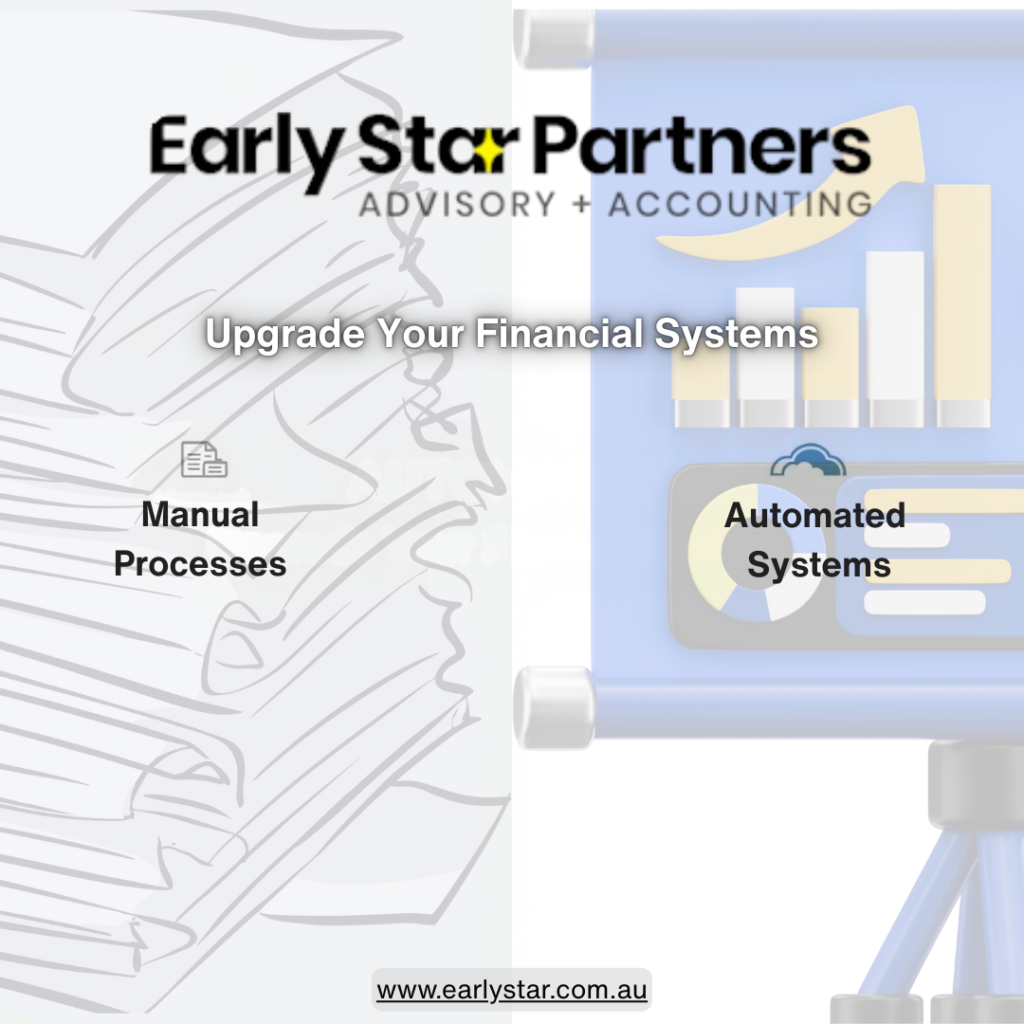
Many businesses still rely heavily on manual finance processes. Spreadsheets are updated by hand. Invoices are reconciled manually. Payroll adjustments require repetitive intervention. While these methods may function initially, they rarely scale efficiently. Manual processes increase risk. They rely on individual memory, increase the likelihood of error, and delay access to accurate reporting. As business […]
Operational Efficiency: The Financial Advantage Most Businesses Overlook

Operational efficiency is often discussed in terms of productivity, staffing, or workflow improvements. However, its financial impact is frequently underestimated. Efficiency directly influences profitability. When internal processes are disorganised or manual, businesses lose more than time. They lose visibility, margin control, and strategic capacity. Small inefficiencies — duplicated tasks, inconsistent expense coding, manual reconciliations — […]