
Preparing for the Next Quarter: A Strategic Financial Reset

As February concludes, attention naturally turns toward the next quarter. Quarterly financial planning is one of the most underutilised strategic tools available to business leaders. Rather than waiting for end-of-year reflection, quarterly resets allow businesses to: It creates momentum without waiting for a full financial cycle to conclude. Why Quarterly Review Matters A structured quarterly […]
From Reactive to Proactive: Strengthening Financial Decision-Making

Many businesses operate in reactive mode without realising it. Decisions are made in response to immediate pressures — a large expense, an unexpected dip in cash flow, a regulatory requirement, or a hiring need. While occasional reactive decisions are unavoidable, consistent reactivity signals a structural gap. Proactive financial decision-making changes the tempo of leadership. The […]
Navigating the Australian Business Landscape in 2026: Stability Through Clarity

The Australian business landscape continues to evolve. While inflation has moderated compared to previous years, operational costs remain elevated. Wage growth, superannuation increases, and regulatory complexity continue to shape the financial environment for many organisations. For business owners, the challenge is no longer crisis response — it is disciplined navigation. Stability in 2026 will not […]
Outsourcing Finance: A Smarter Alternative to Building an Internal Team

As businesses expand, financial administration inevitably becomes more demanding. Leadership often reaches a decision point: Should we hire internally, or outsource? While internal teams provide direct oversight, they also introduce fixed costs, recruitment time, and training requirements. Outsourcing offers flexibility. The Benefits of Finance Outsourcing Outsourcing finance functions provides: For many growing businesses, outsourcing provides […]
Hiring for Growth: The Financial Questions You Must Ask First

Hiring is one of the most significant financial decisions a business can make. While increased demand may justify expanding your team, employment commitments extend beyond salary alone. Superannuation, leave entitlements, payroll tax thresholds, and compliance obligations must all be factored into the equation. Growth through hiring should be calculated — not assumed. The True Cost […]
Scaling Your Business? Why Financial Structure Must Come First

Growth is exciting. Scaling is different. Many businesses experience strong revenue growth and interpret it as a signal to expand — hire more staff, increase marketing, add services, or invest in infrastructure. However, scaling a business financially requires more than momentum. It requires structure. Without strong financial systems underneath expansion, growth can amplify weaknesses rather […]
Why Governance Matters Even for Small Businesses

Governance is often misunderstood as a corporate concept reserved for large enterprises. In reality, governance simply means structured oversight and responsible decision-making. For small businesses, governance may not involve a formal board. Instead, it may include: These elements create discipline and stability. The Risk of Informal Decision-Making Small businesses often rely heavily on founder intuition. […]
What Makes a Strong Board-Level Financial Report?
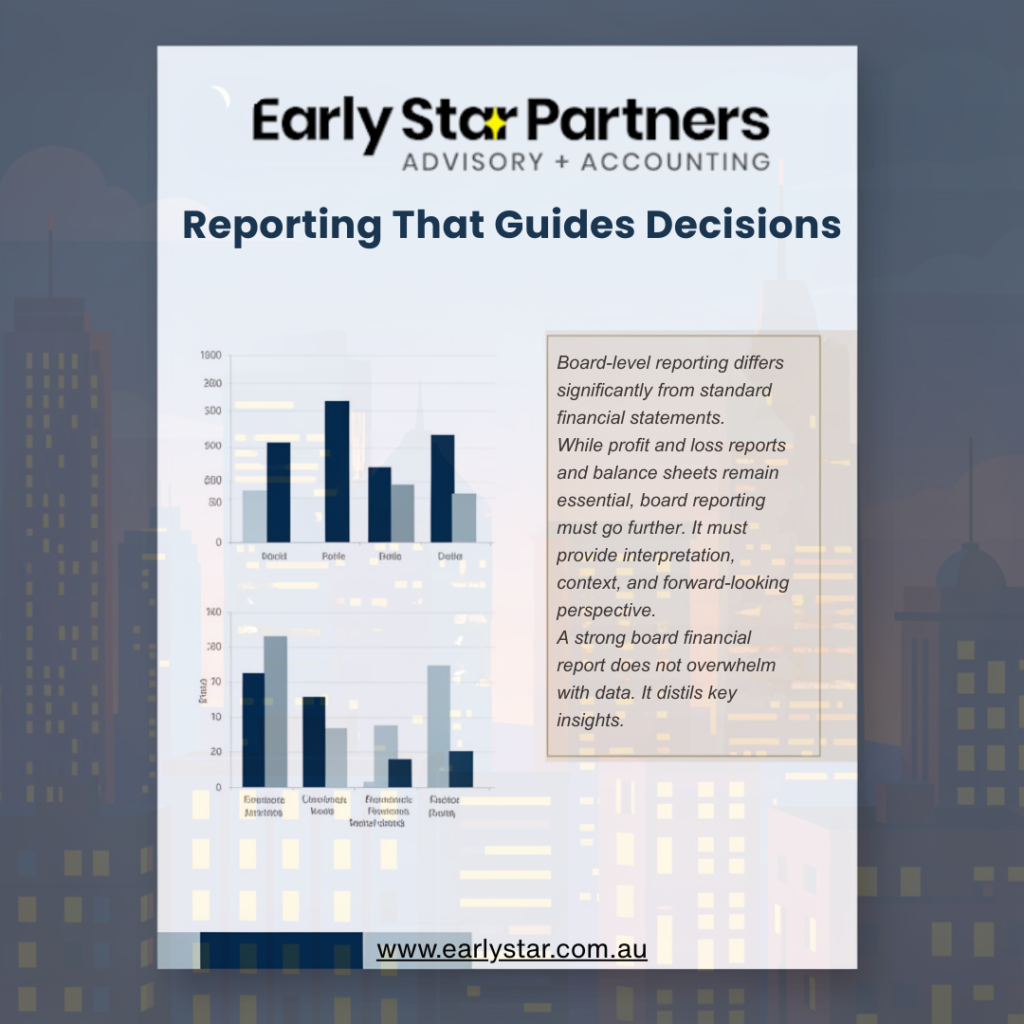
Board-level reporting differs significantly from standard financial statements. While profit and loss reports and balance sheets remain essential, board reporting must go further. It must provide interpretation, context, and forward-looking perspective. A strong board financial report does not overwhelm with data. It distils key insights. Moving Beyond Basic Statements Traditional reports answer “what happened.” Board […]
Financial Transparency: Why It Strengthens Leadership and Governance

Financial transparency is often associated with large corporations and regulatory requirements. However, for small and mid-sized businesses, transparency is equally powerful. It builds trust.It improves decision-making.And it strengthens governance structures — whether formal boards exist or not. Transparency does not simply mean sharing financial statements. It means ensuring that financial information is accurate, accessible, and […]
The Financial Impact of Delayed Payments — And How to Manage It

Delayed payments are one of the most common — and underestimated — threats to business stability. A strong month of invoicing may create the appearance of financial health. However, when receivables extend beyond agreed terms, liquidity pressure builds quickly. In sectors where payment cycles are complex — including government-funded services, subcontractor arrangements, and large corporate […]
Risk Management in Business: Financial Planning Beyond Insurance

When business owners hear the term “risk management,” insurance policies are often the first consideration. While insurance plays a role in protecting assets, financial risk management extends far beyond coverage. Financial risk arises from multiple sources: Managing these risks requires structured financial planning, not simply protective contracts. Understanding Financial Exposure Every business operates with varying […]
Why Cash Reserves Matter More Than Revenue in Uncertain Times

Revenue often receives the most attention in business performance discussions. Growth targets, new client acquisition, and turnover milestones dominate strategic planning conversations. Yet during periods of economic uncertainty, revenue alone does not determine stability. Liquidity does. Cash reserves provide flexibility, resilience, and decision-making confidence in ways that revenue cannot. A business may generate significant income, […]